Current Topics
Watching the Ivy League Become Test-Optional
Marla Platt • June 19, 2020

Harvard, Yale, Princeton, Cornell, Brown, U Penn, Columbia and Dartmouth have made the SAT and ACT optional for their 2020-21 applicants
Given limited availability of standardized testing dates and locales due to impacts of the novel corona virus, students applying to college this upcoming admissions cycle have seen dozens of colleges and universities announce standardized testing
policy shifts.
Most of the changes point to a one-year hiatus
from requiring SAT or ACT scores, while some schools expand their pilot of test optional programs from one to three years in duration. Still, others have determined that standardized testing results will no longer play a role in evaluating applicants for admission, thereby resulting in test-blind
reviews.
Yet, the most noteworthy shift has taken place in the Ivy League
as each of the 8 colleges and universities has announced that they will pause requirements of standardized testing scores for students applying to college this fall.
The trend started with Cornell
declaring their test-optional stance on April 22. June 18 saw Princeton
become the most recent and final Ivy to announce a temporary test-optional policy.
Marla Platt, M.B.A. is an independent college consultant based in Sudbury, MA through AchieveCoach College Consulting, providing expert and personalized college counseling to students and families throughout the college planning, search and admissions process. Marla is a professional member of the Independent Educational Consultants Association and can be reached via www.achievecoach.com
Serving high school students in:
Sudbury, Wayland, Acton, Groton, Hopkinton, Newton, Wellesley, Weston, Natick, Needham, Brookline, Bolton, Concord, Carlisle, Lexington, Framingham, Dover, Sherborn, Grafton, Hopkinton, Arlington, Cambridge and all of Metrowest Boston and New England.
Recent posts

What makes a high school passion project meaningful to selective college admissions, and how to help your student build one that lasts.

When choosing a college, campus mental health resources matter as much as academics. Learn what to look for, what to ask, and which schools earned the 2026 Princeton Review Mental Health Services Honor Roll.

The ACT Science section is now optional at most colleges. Find out exactly who requires it, who recommends it, and how to decide if it's right for your college list.

Colleges with rolling admissions review your application as it arrives — no waiting for a deadline. Discover the top schools and how to apply strategically.

What do colleges really look for in applications? A college consultant explains what matters most—from grades to activities to personal fit.
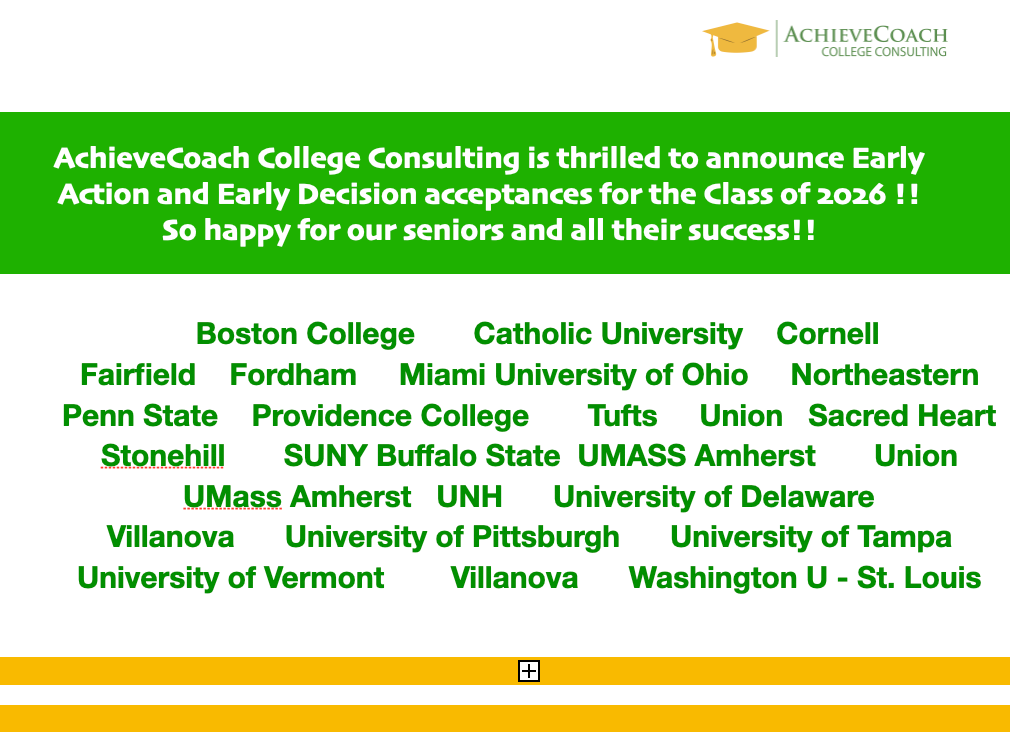
ADMISSIONS ACHIEVED!! Here are some of the colleges our students have been admitted to