Current Topics
College Admission Success Tips for December
Marla Platt • December 9, 2020

Wrapping up well in 2020 sets students on the right path for rest of the school year
Early December
greetings!!
Amazing how much students have already accomplished and managed within just a few months after starting school this fall! With less than one month remaining in this extraordinary year, there are several important steps and to-do’s worth sharing before the calendar turns to 2021. No matter which high school year is “your" year, do read down the list below and see what personally resonates with how you’d like to wrap up this month and anticipate the new year!
Seniors
- Continue to work on any remaining applications at this time. Even if awaiting imminent ED application decisions, it is smart to be drafting remaining RD essays so you are not caught under time pressure later this month to complete your remaining writing. Deadlines are not the same as due dates. Avoid working to the last minute and instead aim for an uncluttered and relaxing holiday break!
- For those students who have begun to hear back about decisions from their early or rolling colleges — congratulations on admissions achieved! But even if you’ve been admitted to your college(s) of choice, colleges will want to see final senior transcripts, so maintaining good grades throughout senior year is important. Colleges have been know to rescind admission in light of significant grade drops or change in curriculum.
- FAFSA applications (and possibly the CSS/Profile) should be underway or already submitted if planning on applying for need-based financial assistance. In considering cost of attendance, be sure to review the Net Price Calculator located on each college's Financial Assistance webpage.
Juniors
- Continue to build your academic strengths, whether you are learning in-person or over Google Hangouts.
- It is important to build connections with your teachers, even if learning in a virtual setting, so you are in a position to request one or two solid recommendations later this year.
- If you are experiencing academic performance challenges, especially given a remote or hybrid learning experience, aim to schedule time with teachers for additional assistance. If additional tutoring would help, don't hesitate to look into available outside resources. For free online assistance, visit Khan Academy.
- Connect virtually with colleges of interest via a webinar or Admissions chat to virtually learn about colleges. In-person visit scheduling continues to be immensely variable at this time.
- Consider on how you might build on your involvements or leadership experiences to continue developing your high school resume. Now is a great time to start thinking about what you might want your upcoming spring and summer to look like as opportunities for engagement begin to re-emerge.
- As we head toward winter and indoor activities, the season lends itself to creative pursuits. What creative interests might you want to develop?
Sophomores
- Before you know it, junior year course selection will be on your to-do list. As a sophomore continuing to develop academic strengths, consider the right level of classroom challenge for you along with the junior year courses you might enroll in.
- If you tried the PSAT this year, expect results to arrive soon. Have a look at these scores with an eye toward a testing path for junior year.
- Think about how you could use your budding leadership or service skills to help others in your community and develop your “story.” By putting energies toward supporting others, you will also be investing in yourself as well as building hours toward your high school or National Honor Society service requirements.
Above all, students do well when they work to their strengths, stay healthy and safe, and are appreciative of the connections and support available in their communities!
Marla Platt, M.B.A. is an independent college consultant based in Sudbury, MA through AchieveCoach College Consulting, providing expert and personalized college counseling to students and families throughout the college planning, search and admissions process. Marla is a professional member of the Independent Educational Consultants Association and can be reached via www.achievecoach.com
Serving high school students in:
Sudbury, Wayland, Acton, Groton, Hopkinton, Newton, Wellesley, Weston, Natick, Needham, Brookline, Bolton, Concord, Carlisle, Lexington, Framingham, Dover, Sherborn, Grafton, Hopkinton, Arlington, Cambridge and all of Metrowest Boston and New England.
Recent posts

What makes a high school passion project meaningful to selective college admissions, and how to help your student build one that lasts.

When choosing a college, campus mental health resources matter as much as academics. Learn what to look for, what to ask, and which schools earned the 2026 Princeton Review Mental Health Services Honor Roll.

The ACT Science section is now optional at most colleges. Find out exactly who requires it, who recommends it, and how to decide if it's right for your college list.

Colleges with rolling admissions review your application as it arrives — no waiting for a deadline. Discover the top schools and how to apply strategically.

What do colleges really look for in applications? A college consultant explains what matters most—from grades to activities to personal fit.
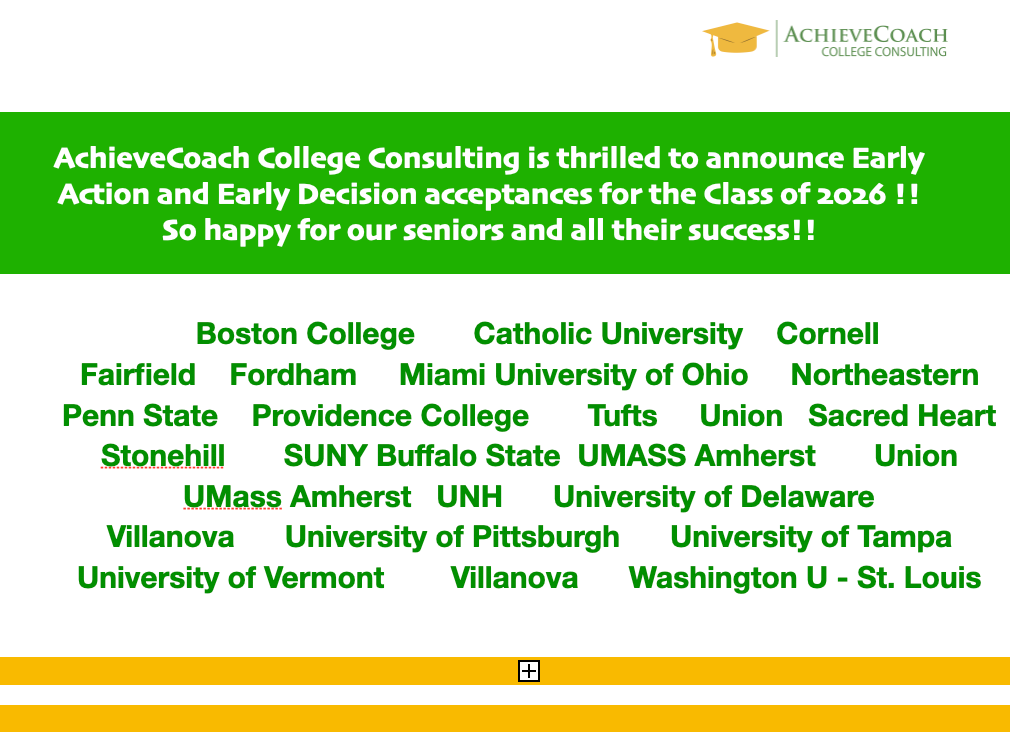
ADMISSIONS ACHIEVED!! Here are some of the colleges our students have been admitted to